College of Oil and Gas Engineering — Basra University of Oil and Gas | البوابة الأكاديمية والتعليمية الرسمية لقطاع الطاقة والنفط والغاز


Scientific departments in the college
Registered academic faculty members
Registered students in the portal
Message from the Deanship
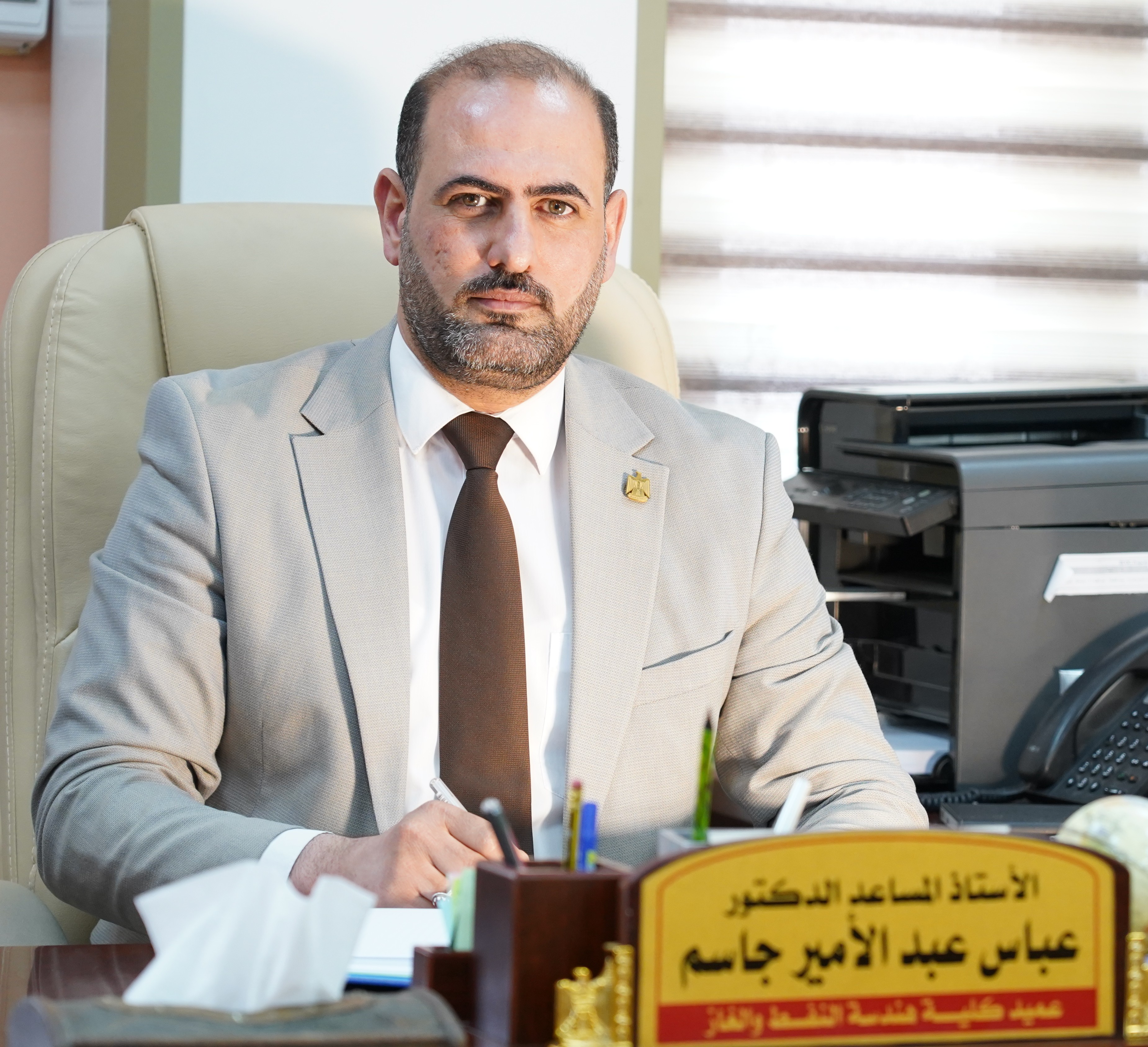
Assist. Prof. Dr. Abbas Abdul Ameer Jasim — Dean of the College
In the Name of Allah, the Most Gracious, the Most Merciful.
I warmly welcome you to the College of Oil and Gas Engineering (CENG), a unique and specialized academic institution that stands as a vital pillar for the energy and petroleum sectors in our nation. Our mission is to educate and empower a new generation of engineering and technical leaders equipped with modern scientific knowledge, cutting-edge analytical tools, and practical skills.
Our specialized curricula across Oil and Gas Engineering have been meticulously designed to merge academic rigor with contemporary industrial application. We are committed to fostering an inspiring educational environment that encourages innovation, leadership, and constructive partnership with local and global institutions.
Quick Digital Portals Hub
Student Portal
Explore state-of-the-art ECTS curricula, schedules, and enroll directly in your Bologna Process courses.
Faculty Cadre
Search the directories of faculty members and scientists, and access research papers and dynamic profiles.
Alumni & Partners
Connect with prestigious IND alumni in oil & gas fields, and explore scientific collaborations.
Digital Library
Browse and download academic resources, textbooks, research papers, and guides for your studies.
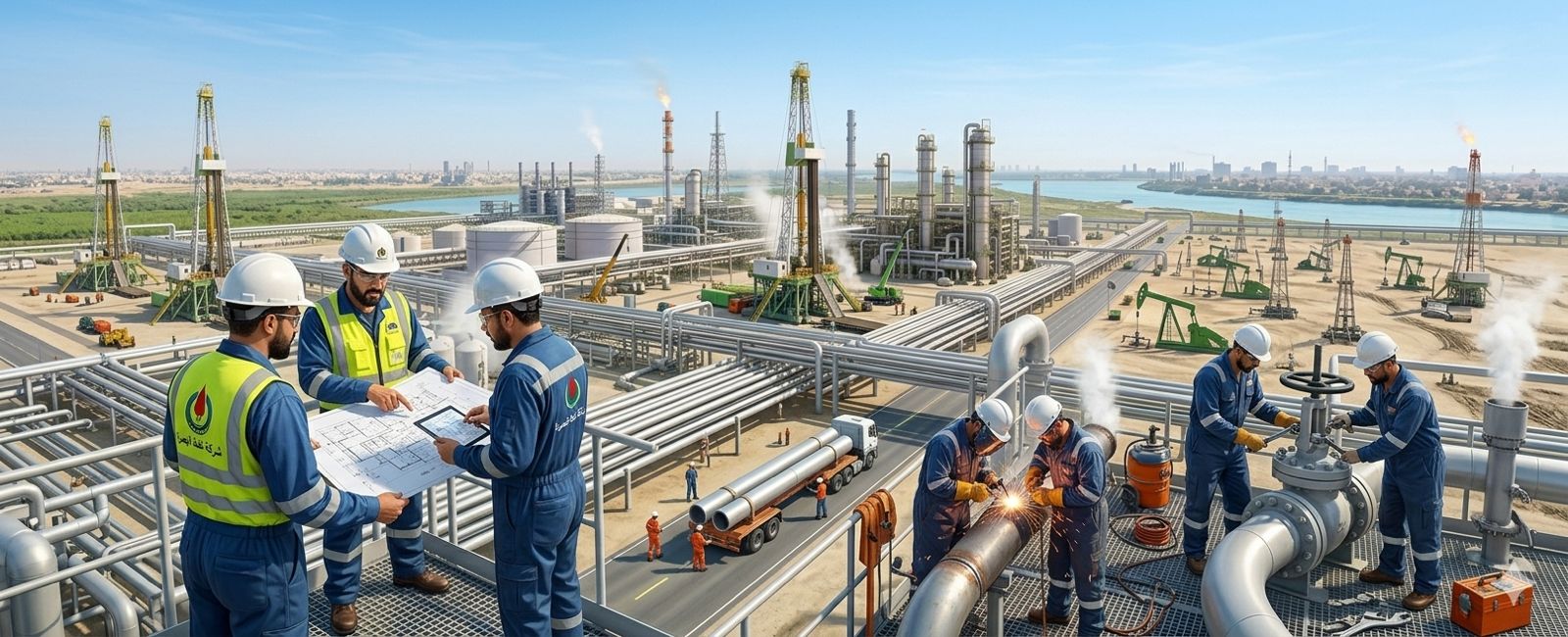
The Heart of Basra University of Oil and Gas: Specialized Academic Departments
We offer distinguished academic programs tailored to prepare leaders capable of managing and developing the oil, gas, and energy sectors.
Chemical Engineering & Oil Refining
Specializing in refinery processes, chemical operations, thermodynamics, and petroleum refining engineering.
Oil & Gas Engineering
Core petroleum engineering focusing on drilling, reservoir simulation, logging, and production technology.
Gas & Petrochemical Processes Engineering
The Gas and Petrochemical Engineering Department was established within the College of Oil and Gas Engineering at Basra Oil and Gas University to offer a Bachelor's degree in Gas and Petrochemical Engineering. The intake for undergraduate studies ranges between 40-50 students annually as a minimum. The department was founded to meet the growing needs of Iraq's energy sector, particularly in Basra Governorate, which represents the country's economic capital and the hub of hydrocarbon industries. The department aims to address the acute shortage of national engineering specialists in technologies for exploiting associated and natural gas and in developing refining and petrochemical industries, contributing to supporting the national economy and advancing the transition to clean and sustainable energy. The department's specialized courses include Gas Properties, Natural Gas Processes, Natural Gas Engineering, Gas Transmission and Storage, as well as Reactor Design and Petrochemical and Polymer Engineering. The educational process in the department relies on integrating both academic and practical aspects; curricula are taught according to the goal of each stage with balanced study units based on the standards of the global Bologna process.This modern system focuses on enhancing student-centered learning outcomes and boosting research and innovation skills through advanced lab training and field visits to oil facilities and gas complexes in Basra Governorate, ensuring that graduates' skills align with international engineering standards and meet the needs of both local and international companies.
Latest Scholarly & Scientific Publications
We proudly highlight our faculty members' active contributions to global energy research in world-renowned journals.
ENHANCED BREAST TOMOSYNTHESIS RECONSTRUCTION USING DISTANCE-DRIVEN MAXIMUM LIKELIHOOD EXPECTATION MAXIMIZATION TECHNIQUE
📖 Kufa Journal of Engineering
Early detection of breast cancer significantly improves patient outcomes through timely and accurate diagnosis. This study proposes a hybrid image reconstruction method combining the Maximum Likelihood Expectation Maximization (MLEM) algorithm with the Distance Driven Method (DDM) for stationary digital breast tomosynthesis, aimed at producing high-resolution three-dimensional (3D) breast images. The method was initially validated using simulated projection data of a digital breast phantom modeled with two spheres of varying radii and attenuation coefficients. Fifteen projection images were generated over a 15° angular range (from +7° to –7° with 1° increments) to replicate realistic tomosynthesis acquisition. The focus plane was set 45 mm above the detector with a pixel size of 0.14 mm. Reconstruction results demonstrated enhanced image quality, with spatial resolution quantitatively evaluated using the Line Spread Function (LSF) across the smaller sphere. Compared to the Ray Driven Method (RDM), the MLEM-DDM approach provided better contrast, sharper edges, and fewer artifacts.

HEPATITIS C VIRUS STAGES CLASSIFICATION USING TRANSIT SEARCH ALGORITHM AND LONG SHORT TERM MEMORY
📖 Kufa Journal of Engineering
Hepatitis C Virus (HCV) is a disease that infects the liver with multiple stages that spread through blood, requiring blood tests and body symptoms for diagnosis. The diagnosis should decide which stage the patient reaches. This work suggests a hybrid classification method based on optimization and machine learning techniques. A Long Short-Term Memory Neural Network (LSTM) is used as a classifier to identify the stages of the disease, based on the four stages, using 28 features comprising body symptoms and blood tests. To find the optimal number of hidden cells in the hidden layers of LSTM, the Transit Search Algorithm (TSA) is used, TSA identifies the best integer value for the number of hidden cells and selects the best features combined with this number of cells that will give the highest accuracy of classification. The preprocessing step is required to enhance the quality of the dataset and resizing it. In multiclass classification, a large dataset is essential for the network to learn effectively through all classes. To achieve this, Synthetic Minority Oversampling Techniques (SMOTE) is used to generate similar data that will increase the size of the dataset. The proposed TSA-LSTM method achieves high performance, with classification accuracy exceeding 99% outperforming previous works.
Brushless DC motor optimum speed control using TSA-PID strategy
📖 Journal of Engineering and Applied Science
Due to the applied load torque variations, the electric Direct Current (DC) motors' speed has many more fluctuations. The main objective of this research is to study the speed control of Brushless DC Motors (BLDCMs) using a Proportional Integral Derivative (PID) controller that regulates the motor voltage. This controller was automatically tuned using the Transit Search Algorithm (TSA). The effects of the proposed controller on BLDCM speed control were studied, analyzed, and compared with those of other PID gain calculation methods like Particle Swarm Optimization (PSO), Adaptive Tabu Search (ATS), Genetic Algorithm (GA), Rime-inspired metaheuristic (RIME) and Whale Optimization Algorithm (WOA). The performance is evaluated by contrasting speed-response characteristics such as Settling Time (ST), Rise Time (RT), and Percentage Overshoot (P.O.%). Different objective functions, such as the Integral Absolute Error (IAE), Integral Squared Error (ISE), Integral Time Absolute Error (ITAE), and Mean Squared Error (MSE), are used with TSA to determine the best PID gain parameters for controlling the BLDCM using each objective function separately. The main novelty of this work lies in the integration of fusion-based execution criteria with the TSA's effective search ability to achieve high-quality, superior, and robust PID gains for the BLDCM speed control process. The performance of the PID-TSA for controlling the speed of the BLDCM surpasses that of other controllers by optimizing its control and confirming the superiority of the proposed system under different applied load conditions. The proposed controller uses a fusion objective function (FOF) to achieve a fast response with zero P.O.%, ST equal to 0.027 s, and a RT reach to 0.01 s using single run, in addition, average with standard deviation values of (RT = 3.96414E-05 ± 2.85417E-05 s and ST = 0.002346233 ± 0.000439398 s) for 30 runs.
Latest News & Announcements
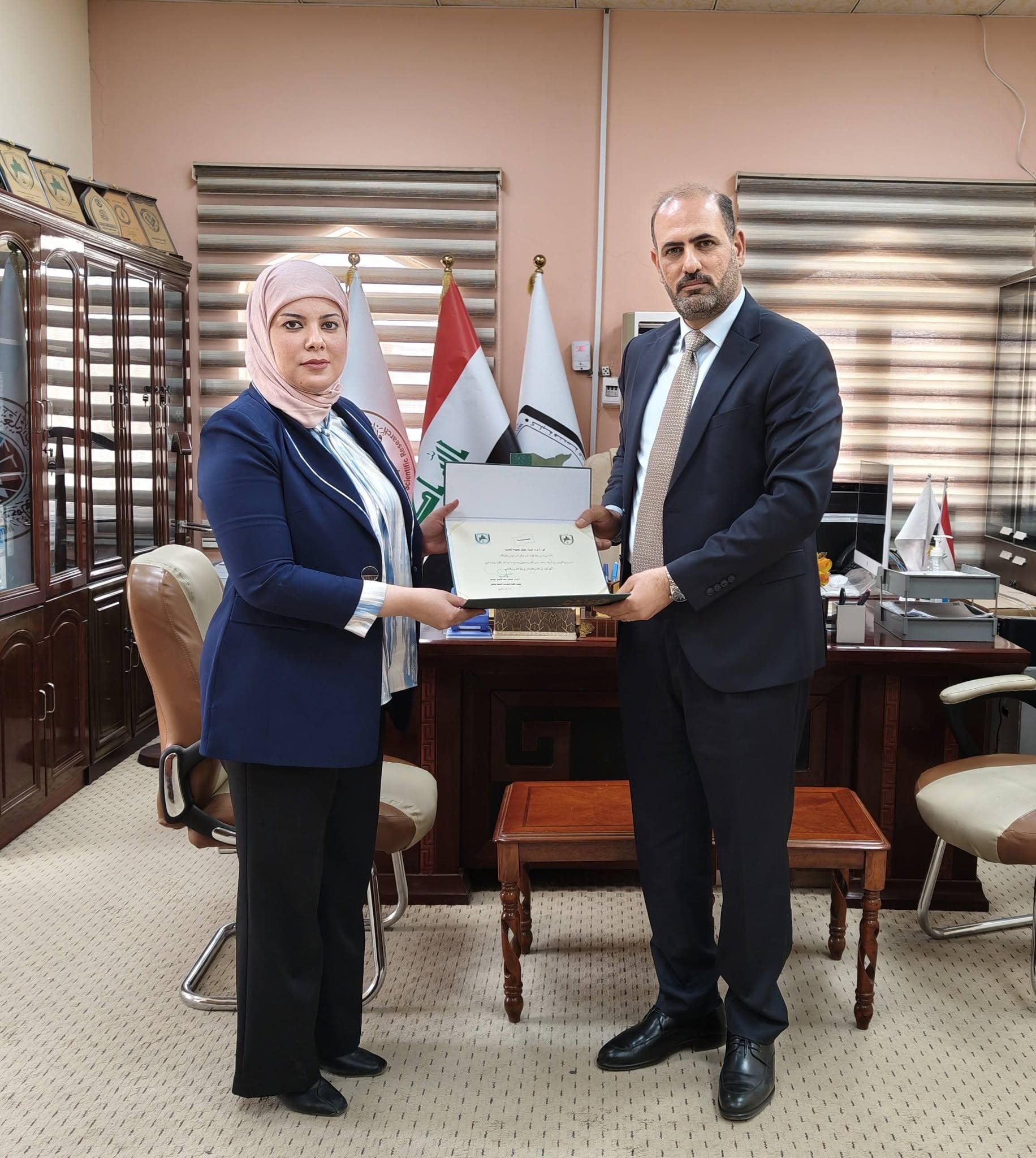
The Dean of the College of Petroleum and Gas Engineering congratulates the faculty member Esraa Jamal on her promotion to Assistant Professor.
Mr. Dean of the College of Petroleum and Gas Engineering, Assistant Professor Dr. Abbas Abdul Ameer Jasim, congratulated the facul...

Writing formal Emails
Under the patronage of the President of Basra University for Oil and Gas, Professor Dr. Mohammed Hilal Hafez Al-Kaabi, and the sup...
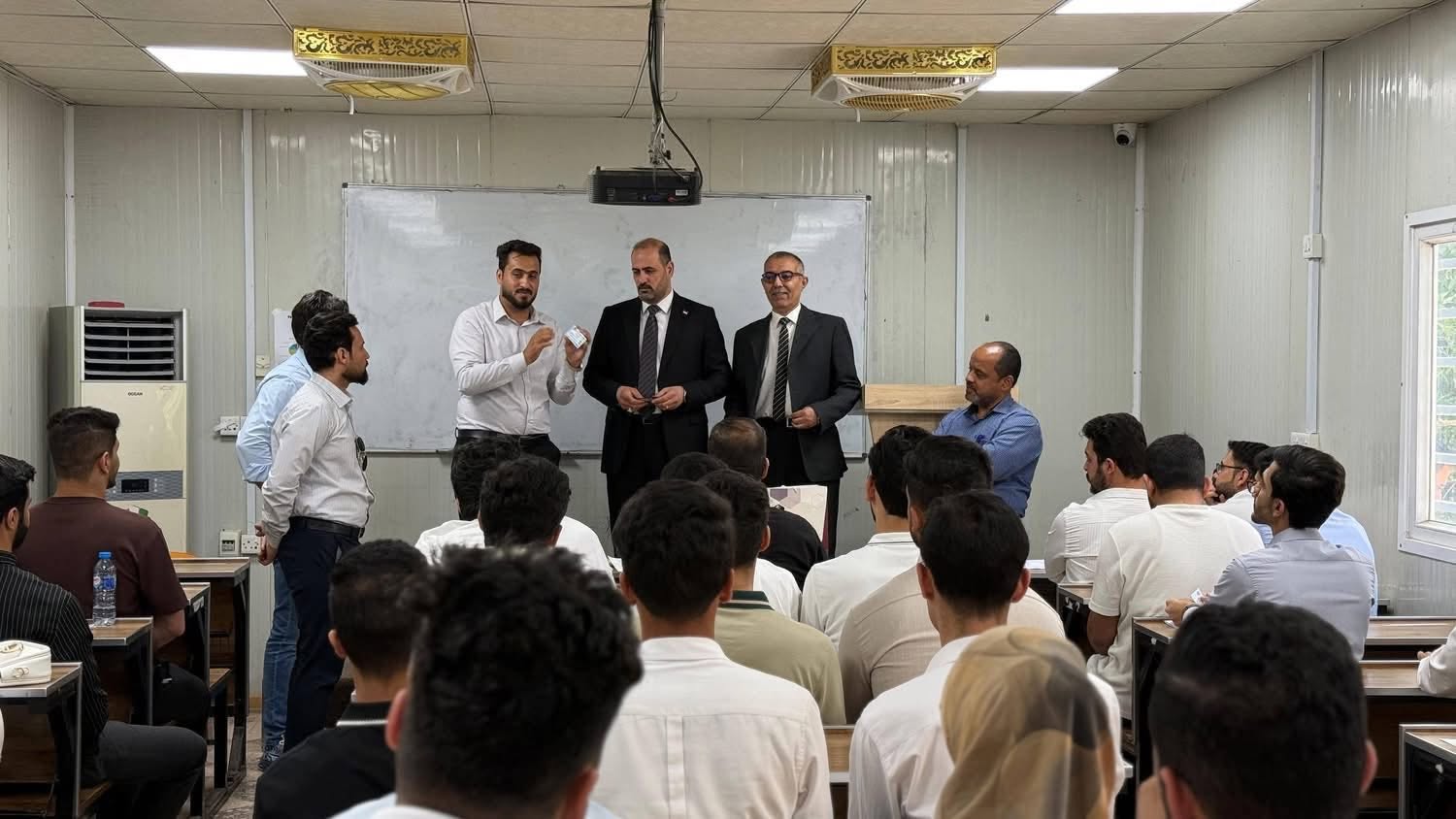
Delivery of new university IDs to the students of the College of Oil and Gas Engineering through the Higher Education Digital Platform (HEPIQ)
Delivery of New University IDs to Students of the College of Petroleum and Gas Engineering via the Higher Education Digital Platfo...